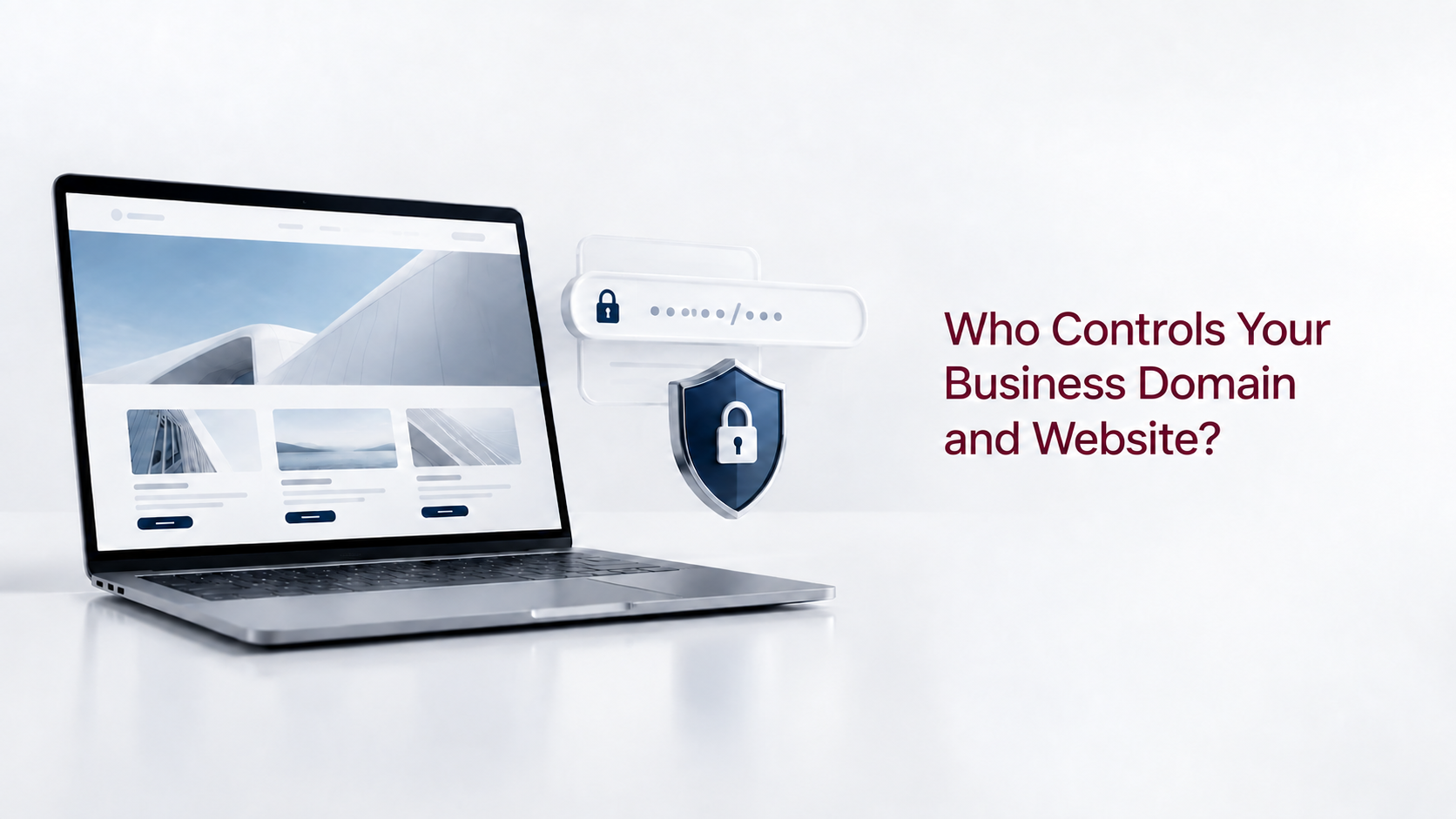
This question is often ignored until a website goes offline, a domain expires, an employee leaves or the original developer stops responding. At that point, management discovers that the domain was registered using someone else’s email address, hosting credentials were never provided, or nobody within the company has administrator access to the website.
A business website is not only a marketing platform. It is a company asset, and its ownership should be clear.
Your domain is part of your business identity
A domain connects customers to your website and supports professional email addresses. If the company loses control of it, the website and business email services may be interrupted.
The domain should be registered using information controlled by the business. At least one authorised company representative should know the registrar, renewal date and account recovery details. Payment receipts and renewal records should also be kept where management can access them.
A developer or service provider may manage the domain on behalf of the company, but management should still understand where it is registered and how ownership can be verified.
Hosting access should not remain with one person
Website hosting contains essential files, databases, backups and configuration details. When access is limited to one employee or developer, the business becomes dependent on that person for every update, migration or technical problem.
The company should maintain an organised record of its hosting provider, renewal schedule, login access and support contacts. Credentials must be stored securely and only shared with authorised people, but they should never exist solely in one person’s private records.
Your company needs website administrator access
Website administrator access allows authorised users to update content, manage users and review important settings. Even when an external company manages the website, the client should retain suitable ownership or administrative access.
This does not mean giving every employee full control. Too many administrators can create security risks. It means ensuring that the organisation has verified access and can continue managing its website if a service provider changes.
Ownership does not replace security
Keeping control of digital assets does not mean sharing passwords through WhatsApp groups, email threads or office notebooks. Access should be properly documented, protected with strong passwords and secured with two-step verification wherever available.
Old administrator accounts should be removed when staff or service providers leave. Website software, plugins and security certificates should also be monitored and updated. Clear ownership and regular maintenance work together to protect the website.
Request a proper handover
When a website is completed, the handover should include the domain registrar, hosting provider, website administrator details, renewal dates, backup information and relevant licences. The business should also understand which services require annual renewal and who is responsible for maintaining them.
BAKLA LTD develops and maintains business websites with attention to ownership, continuity and long-term management. We help clients understand the systems supporting their websites instead of leaving important digital assets without clear control.
Your business should never have to search for the person who owns its own website.