“We already have a Facebook page, why do we need a website?” It is a fair question, especially when customers are finding your business through social media and placing orders through WhatsApp. If those channels are bringing inquiries, a website can look like an extra expense without an obvious purpose.
But receiving messages is only one part of your online presence, customers also need to understand your services, assess your experience and find information when you are not available to explain it. The real question is whether your social pages can support that whole process as your business grows.
Being visible is different from being understood
A social media post can attract attention to a product, project or offer, but it usually presents one part of your business at a time. Someone who discovers you through that post may still need to know what else you provide, where you operate and whether your experience matches their requirements.
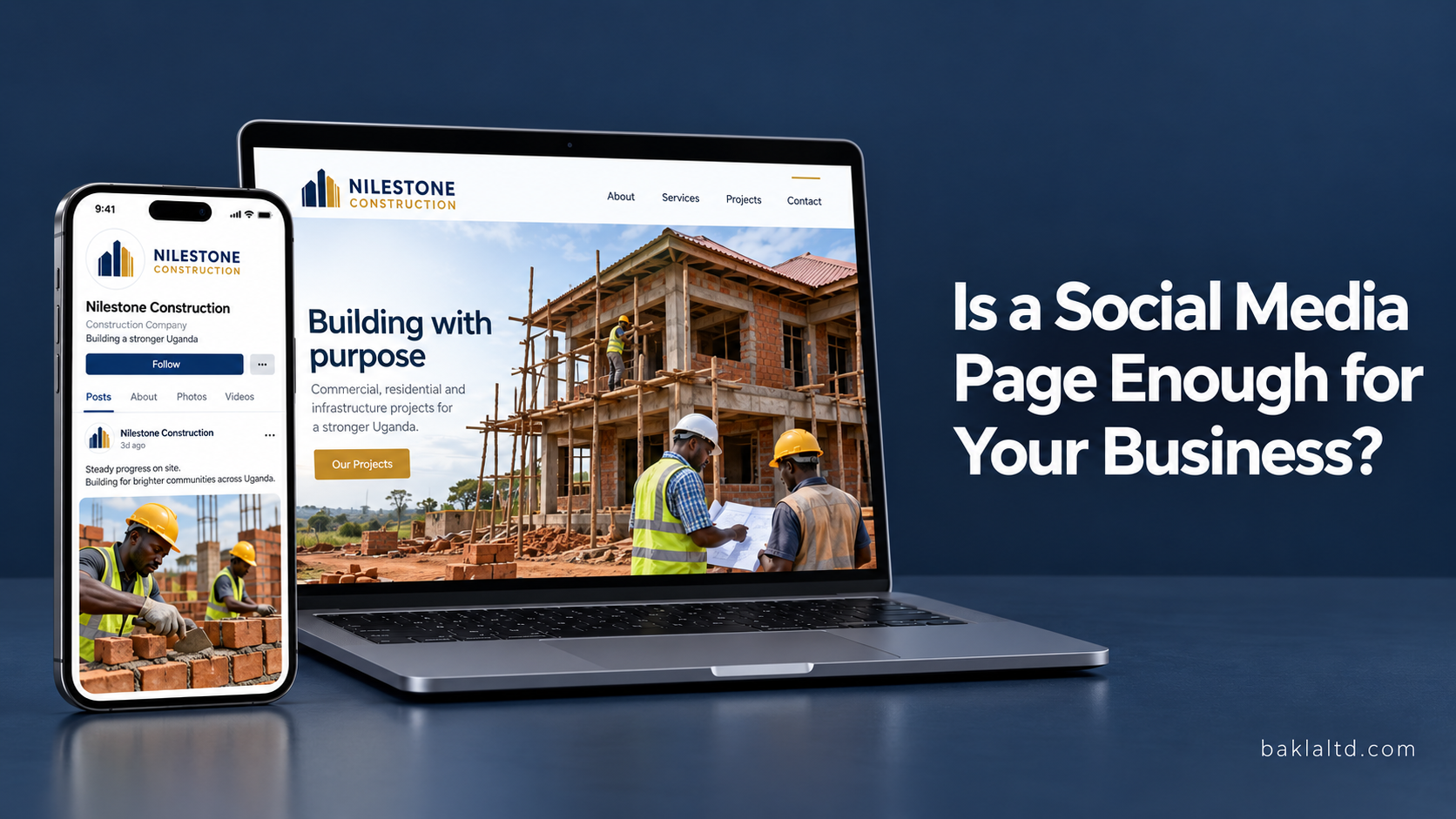
Imagine a construction company sharing photographs of a completed house, a prospective client likes the work but wants to know whether the company also handles commercial buildings, renovations or project supervision. If those details are scattered across older posts, the client must search or send a message before they can properly assess the company.
A website gives you a place to bring that information together, allowing someone to move from discovering your work to understanding your offer.
Customers should not have to ask for every detail
Messages are valuable when a customer needs advice or a quotation, but basic information should be easy to find without waiting for a reply. If your team repeatedly answers the same questions about services, location, working hours or booking procedures, your online information may need better organisation.
Consider someone researching service providers after office hours, they may be ready to compare options even though your team is unavailable. A clear website can explain your services, show relevant examples and provide a way to submit an inquiry, giving them something useful to work with before the conversation begins.
This does not remove the need for personal communication, it makes that communication more productive because the customer arrives with a better understanding of your business.
Different purchases require different levels of information
A customer buying a familiar item may be comfortable ordering from a social media post, while someone committing money to a construction project, professional service or long-term contract is likely to have more questions.
They may want to examine completed work, understand your process, meet the team or confirm the scope of your services. A short caption and a few photographs may start their interest, but they may not provide enough detail to support a decision.
For example, an organisation considering a communication provider could want separate information about website maintenance, content writing and social media management. Dedicated website pages can explain those services clearly, making it easier for the reader to identify what fits their needs.
A website does not automatically establish credibility, but accurate information and relevant evidence give prospective clients a stronger basis for assessing you.
Your information needs a stable home
Social media is built around a changing flow of content, so an important announcement or service explanation can become harder to find as newer posts appear. You can organise parts of a page, but the available structure depends on the platform.
Your website gives you more control over how your business information is presented, with a consistent address for each service, project or article. That means a proposal can link directly to a relevant project, an email can point to a service page, and a social post can lead readers to a fuller explanation.
That structure becomes useful when several people within your business are communicating with customers, because they can refer to the same information rather than each preparing a different explanation.
Relying on one channel leaves a gap
If your only point of contact is a social media account, losing access to it can interrupt how customers find and communicate with you. A second channel, such as a maintained website with current contacts, gives people another route to your business.
However, the website also needs proper management, including active domain registration, hosting and suitable access arrangements. Creating another channel only strengthens your presence when your business can keep it available and accurate.
The aim is to build dependable ways for customers to reach you, with clear responsibility for maintaining each one.
Social media and your website should connect
A useful approach is to let each channel serve a clear purpose. Social media can share current activity and invite conversation, while your website provides the organised information behind those updates.
A construction post can lead to a project page explaining the work completed, a hotel promotion can link to room details and booking information, and a service announcement can direct readers to the scope of that service.
The next step should be clear wherever someone finds you, whether that means requesting a quotation, making a booking or contacting the right person. Sending visitors to a homepage that gives them no useful direction wastes the interest your post created.
Build a website around a need
You do not need a large website simply to say you have one, start with the information and actions your customers need. For some businesses, a small site with clear services, work examples and contacts may be sufficient, while others need booking, ordering or more detailed content.
Before commissioning it, identify what your current channels struggle to provide and how the website will address that gap. Also decide who will supply content, approve updates and handle ongoing maintenance, so it remains useful after launch.
A social media page may be enough for a business with straightforward transactions and a manageable number of inquiries. As customers need more detail, your services expand or your team spends more time repeating information, a website can become a practical part of how the business communicates.
Ask whether someone discovering your business today can understand your offer, assess your work and take the next step easily. If they cannot, that is the gap your online presence needs to address.
For website development and ongoing digital presence management, contact BAKLA LTD at sales@baklaltd.com. We can review your requirements and share a suitable quotation.